How to delay program startup with Task Scheduler on Windows 10/8/7
Nhận đường liên kết
Facebook
X
Pinterest
Email
Ứng dụng khác
Almost every Windows application you install adds itself to the startup list. However, the more programs there are on this list, the more Windows boot time will increase. If you want, you can delay the start of programs using the built-in tool called Task Scheduler.
Today's article will show you how to delay program startup with Task Scheduler on Windows 10/8/7.
How to Use Task Scheduler to Delay Program Startup
There are many ways to delay startup programs in Windows 10. Most solutions force you to use third-party programs. However, you can use the built-in Task Scheduler application to delay the start of programs. It's so easy to do.
1. Open the Task Scheduler by searching for it in the Start menu or by using the Run taskschd.msc command.
2. In the Task Scheduler application, click the Create Task option that appears on the right sidebar.
Click the Create Task option
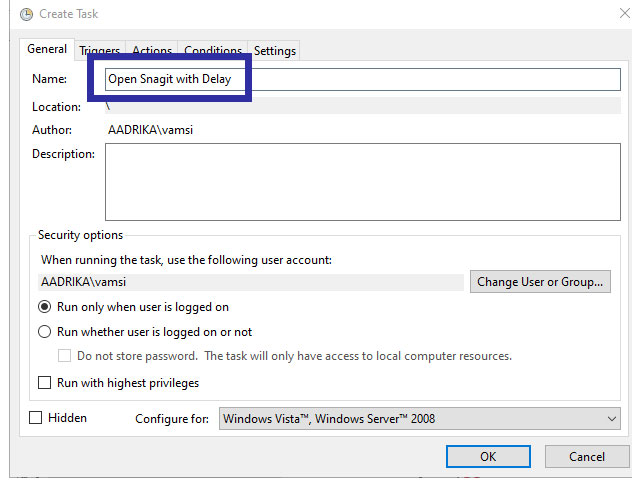
3. In the General tab, give the task a name. In the example case, the author wants to open the Snagit application. So the corresponding name for the task is selected.
Name the task
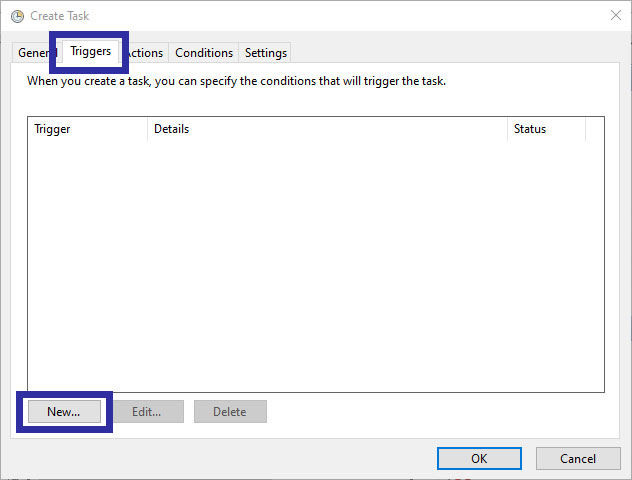
4. After naming the action, go to the Trigger tab and click the New button to create a new trigger.
Click the New button to create a new trigger
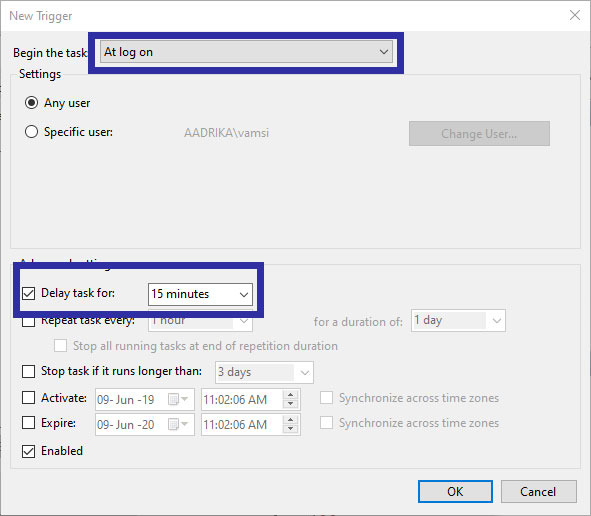
5. In the New Trigger window, select At Log On from the first drop-down menu. Next, select the Delay Task For check box and the 15 minutes option from the drop-down menu next to it. Click the OK button. This will ensure that the task is triggered 15 minutes after you log in. You can choose any time period you want from the drop-down menu.
Set the program start time to 15 minutes after the program begins
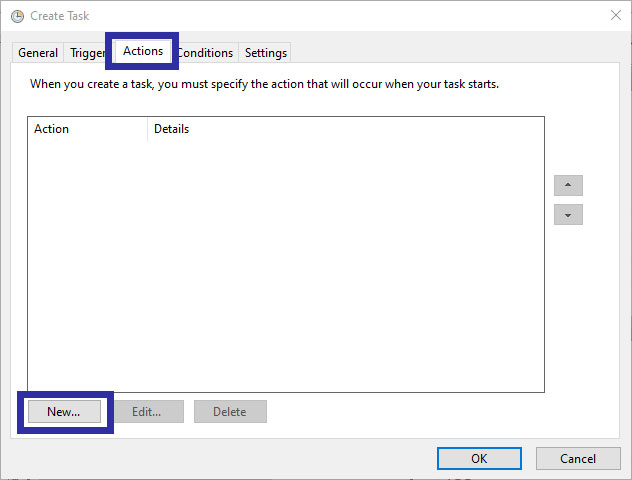
6. Now, you need to add the application you want to open. So go to the Actions tab and click the New button.
Add apps you want to open
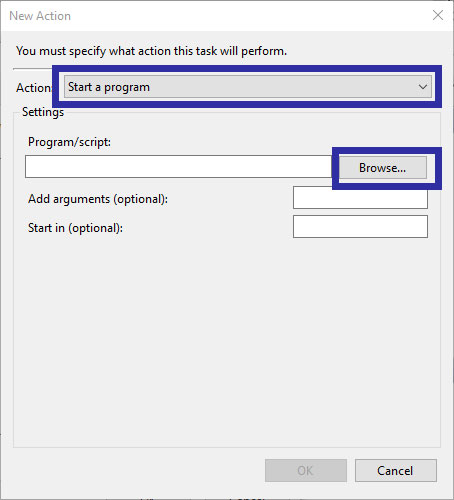
7. Select Start a Program from the first drop-down menu. Next, click the Browse button in Settings.
Select Start a Program from the first drop-down menu
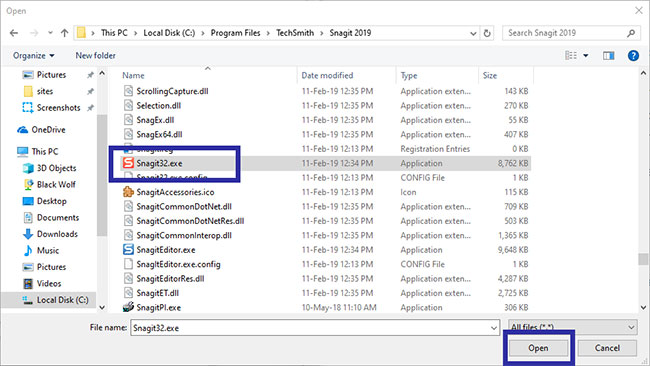
8. Find the application you want to start, select it, and click the Open button.
Find and open the app
9. You will see the file path added in the Program/Script field. Click the OK button to save the changes.
You will see the file path added in the Program/Script field
10. Finally, click the OK button in the main window to save the task.
Click the OK button in the main window to save the task
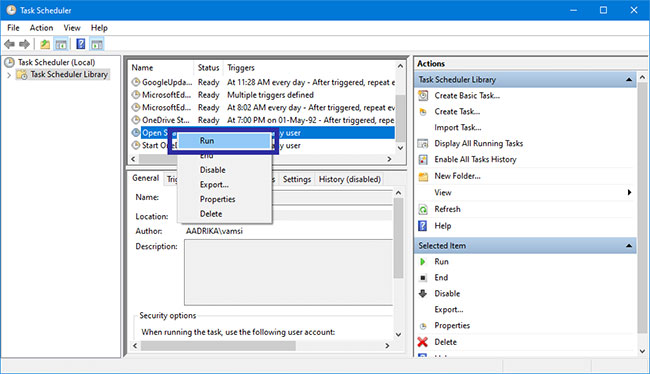
11. To make sure the task runs and opens the application, right-click on the task you just created and select the Run option. This will start the application immediately.
Launch the app for testing purposes
All operations are done! After this, the start of the program will be delayed by 15 minutes after you log in to the system. You can create as many tasks to delay the startup of programs as you like.
Also see: Windows Task Scheduler Automation.
One of the "worst" problems that users often encounter on Windows 10 is the black screen error.
The black screen error can occur in some situations on Windows 10, stemming from problems related to the graphics card, the connection error between the computer and your monitor, the error occurring during the installation of the operating system, updating to new versions, etc., or simply happening randomly at any time.
In the article below, the administrator will guide you with some solutions to fix the black Windows 10 screen error.
In addition, if you encounter a black screen error on Windows 7, 8, or 8.1 computers, readers can refer to the steps to fix the error here.
Steps to fix a basic black Windows 10 computer screen
1. Black screen error during installation
Once there, try turning off the computer by pressing and holding the power button for a few seconds. If using a laptop, you can unplug the charger and remove the battery.
Unplug all unnecessa...
I could write a whole novel about the peculiar dilemma of maintaining visual coherence in Windows 11. A presentation and summary could be made with the help of Microsoft's Copilot, but guess what? The issue would linger, waiting for the next act.
Despite being the best operating system for productivity and gaming, Windows 11 is still not a unified system. Windows 11 may have a newer look and feel, but it still has some vestiges of older versions.
When users attempt to switch from a Microsoft account to a local one, Windows 11 still refers to the Windows 8 "Search Charm," a bizarre case of inconsistent design. When users try to switch to a local account while device encryption is enabled, they are met with the screen shown below.
" data-sizes="(max-width: 1621px) 100vw, 1621px" /> Charm Bar is mentioned in Windows 11
Windows 8's specialized 'Search Charm' has been removed from later builds of the operating system. Users are st...
The touch screen is a great piece of equipment, but it doesn't seem to be an indispensable element on Windows computer models in general. According to previous surveys, there have been many cases of laptop users with touch screens confessing that they rarely touch the screen.
This is because platforms like Windows, Mac, or Chrome OS themselves are optimized for use with a mouse and keyboard rather than touch screens like mobile operating systems. Therefore, users only need a mouse and keyboard to be able to take advantage of the operating system's potential.
This article will show you how to disable the touch screen in Windows 11, avoiding the case of mistaken operations when accidentally touching the screen.
Turn off the touch screen by using Device Manager
To get started, click the Windows Search icon (magnifying glass) on the taskbar, enter the keyword " Device Manager " in the search bar, then click the corresponding result.
On the Device Man...






Nhận xét
Đăng nhận xét