Why is Windows 11 so much more secure than Windows 10?
Nhận đường liên kết
Facebook
X
Pinterest
Email
Ứng dụng khác
Windows 10 has had security issues. From Specter and Meltdown to the recent Print Spooler bug, the list of Windows 10 vulnerabilities is extensive. Therefore, it is a relief to know that Microsoft doubled down on security in Windows 11.
Windows 11 will be a more secure operating system than Windows 10. Microsoft's new focus on security in Windows 11 will revolve around several key features. So let's take a look at the key security features that strengthen Windows 11's defenses.
1. Trusted Platform Module (TPM)
TPM 2.0 supports better cryptographic algorithms
Ever since Microsoft announced that Windows 11 requires support for Trusted Platform Module (TPM) 2.0, this topic has become controversial. Although TPM chips have been around for more than a decade, device manufacturers and users have so far not taken them seriously.
The TPM chip is a cryptographic vault that stores encryption keys, passwords, and certificates. The TPM chip uses stored entries to identify and authenticate devices, software, and users.
For example, in Windows 11, Windows Hello works with the TPM 2.0 chip to secure the login process. The TPM 2.0 chip stores a secret that is associated with Windows Hello and uses that secret to authenticate the user.
According to Microsoft on its Windows Blogs, the reason to use the new TPM 2.0 instead of the older TPM 1.2 is because TPM 2.0 supports better cryptographic algorithms.
In other words, the TPM 2.0 chip will ensure that Windows 11 PCs are authenticated and not compromised.
2. Virtualization-Based Security (VBS)
Virtualization-Based Security (VBS) helps against exploit attacks
Microsoft has included the Virtualization-Based Security (VBS) feature in Windows 11. This feature aims to protect security solutions against exploit attacks by storing these solutions inside a partition segment of system memory that is isolated and secure.
In simpler terms, VBS takes a portion of system memory, isolates it from the rest of the operating system, and uses that space to store security solutions. By doing this, Microsoft is protecting the security solutions that are the primary target of most cyberattacks.
Although VBS support is available in Windows 10, it is not used by default. Microsoft is changing this with Windows 11. The company has announced that it will enable VBS on most versions of Windows 11 by default next year.
3. Hypervisor-Protected Code Integrity (HVCI)
Hypervisor-Protected Code Integrity is a feature of VBS that protects the isolated system memory environment that VBS creates. HVCI ensures that the Windows kernel (the brains of the operating system) is not compromised.
Since many exploits rely on using kernel mode to gain access to the system, HVCI does an important job of ensuring that the kernel is secure and cannot be used to attack the system.
HVCI makes sure the brain of Windows (kernel) doesn't do something stupid that could compromise the security of the system.
Windows 10 comes with HVCI. But it reduces the performance of older CPUs quite a bit. This is one reason why Microsoft requires 8th Gen AMD CPUs or later and Zen 2 or later, as it has HVCI-specific hardware.
In short, Windows 11 will be significantly more secure than Windows 10 by default through the use of HVCI and VBS.
5. UEFI Secure Boot
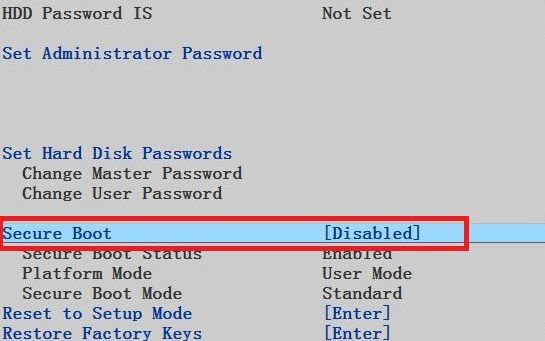
All Windows 11 machines will come with UEFI Secure Boot
Before talking about UEFI Secure Boot, let's make one thing clear: All Windows security tools and protocols can't do anything if your system is compromised before booting.
Simply put, if Windows boots with malicious code, the exploit attack can bypass all security measures. UEFI Secure Boot ensures this doesn't happen by verifying that the computer boots only with code from a trusted source. This source can be the PC manufacturer, chip manufacturer, or Microsoft.
UEFI Secure Boot will be installed by default on every computer running Windows 11. Compared to Windows 10 computers, this will significantly increase the security of Windows 11 machines.
Microsoft is taking steps to ensure that the new operating system is safe from the beginning. VBS and UEFI Secure Boot are technologies that safeguard users from exploit attacks and are made possible by security-focused hardware like TPM 2.0 and more recent CPUs.
However, most Windows users are still using older machines. So Microsoft had to convince people to buy a new PC. That won't be easy.
One of the "worst" problems that users often encounter on Windows 10 is the black screen error.
The black screen error can occur in some situations on Windows 10, stemming from problems related to the graphics card, the connection error between the computer and your monitor, the error occurring during the installation of the operating system, updating to new versions, etc., or simply happening randomly at any time.
In the article below, the administrator will guide you with some solutions to fix the black Windows 10 screen error.
In addition, if you encounter a black screen error on Windows 7, 8, or 8.1 computers, readers can refer to the steps to fix the error here.
Steps to fix a basic black Windows 10 computer screen
1. Black screen error during installation
Once there, try turning off the computer by pressing and holding the power button for a few seconds. If using a laptop, you can unplug the charger and remove the battery.
Unplug all unnecessa...
Microsoft is currently A/B testing a native dark style for the ChatGPT-powered Bing.com, and it has finally begun distributing out Bing.com to Google Chrome and Safari. On Windows 10 and 11, we got a pop-up that allowed Bing AI access through Google Chrome. It appears that certain people can also access Bing AI through Safari.
One of the most cutting-edge and effective language models for users is Bing AI, which is powered on ChatGPT-4. Since late February, Bing.com AI support has been accessible to Microsoft Edge users. Now, Microsoft is beginning to expand its support to all browsers, including Google Chrome and Apple Safari.
Bing AI pop-up in Chrome | Image Courtesy: Thewindowsfan.com
Anyone may now test Bing AI in Chrome thanks to a new pop-up that has begun to show in the taskbar of Windows 10 or 11. In our experiments, Google Chrome's native dark mode support allowed us to access Bing AI. The screenshot below illustrates how the white background changes to a black...
I could write a whole novel about the peculiar dilemma of maintaining visual coherence in Windows 11. A presentation and summary could be made with the help of Microsoft's Copilot, but guess what? The issue would linger, waiting for the next act.
Despite being the best operating system for productivity and gaming, Windows 11 is still not a unified system. Windows 11 may have a newer look and feel, but it still has some vestiges of older versions.
When users attempt to switch from a Microsoft account to a local one, Windows 11 still refers to the Windows 8 "Search Charm," a bizarre case of inconsistent design. When users try to switch to a local account while device encryption is enabled, they are met with the screen shown below.
" data-sizes="(max-width: 1621px) 100vw, 1621px" /> Charm Bar is mentioned in Windows 11
Windows 8's specialized 'Search Charm' has been removed from later builds of the operating system. Users are st...





Nhận xét
Đăng nhận xét