How to connect Bluetooth devices on Windows 10, 8, 7
Nhận đường liên kết
Facebook
X
Pinterest
Email
Ứng dụng khác
The protocol for connecting technological devices via the USB standard is increasingly widespread and appears everywhere in the market today, from complex products such as camcorders to some simple and familiar components, such as phones, headphones, etc. The theory is that, but in fact, quite a lot of people have difficulty connecting peripheral devices to the computer via Bluetooth. We will present the most basic operations to complete this process with Windows operating systems in the following tutorial.
1. Connect Bluetooth devices on Windows 10
To start Bluetooth on a Windows 10 computer, we will have 2 ways: using the keyboard or setting the Bluetooth option in the system settings on Windows 10.
Method 1: Use keyboard shortcuts
Currently, some laptop models support the Fn shortcut + function key from F1 to F12 to turn on or off Bluetooth on the computer.
Method 2: Turn on Bluetooth on a Windows 10 laptop using Action Center
If your computer does not support the Bluetooth function key, we can start it from the Bluetooth settings on the system.
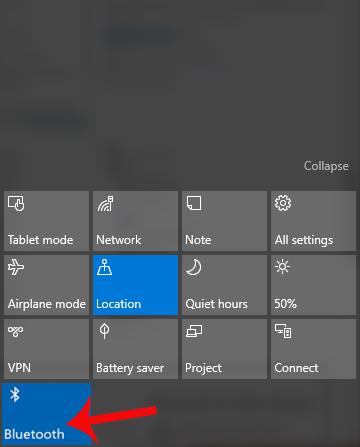
Click on the Action icon or press the Windows + A key combination to open the Action Center, then select the Bluetooth icon to switch to On mode.
To scan for devices that you want to pair with your Windows 10 computer, go to the Bluetooth settings interface on the Windows 10 system.
Thewindowsfan.com has a very specific article on how to use Bluetooth on Windows 10, and you can refer to it here: Instructions on how to connect Bluetooth on Windows 10.
List of Bluetooth connected devices found
2. Connecting Bluetooth Devices on Windows 7
With modern devices, turning on and using Bluetooth is extremely simple and easy; however, with a fairly old operating system like Windows 7, not everyone knows how to turn on, connect, and handle problems encountered when working with Bluetooth.
To use Bluetooth on Windows 7, you need to note:
Check if your computer has Bluetooth.
Make sure that Bluetooth is turned on, as shown by the icon in the taskbar.
Make sure that any wireless control software or source is Bluetooth-enabled.
Make sure the Bluetooth-connected device is powered on, and check by looking at its power indicator.
You can press the Connect button on a Bluetooth device to make the speaker shake hands with the Bluetooth adapter on your computer or laptop.
Make sure that the driver for the Bluetooth device is installed successfully.
Connecting Bluetooth Devices on Windows 7
Here is a link to a comprehensive guide on Thewindowsfan.com about using Bluetooth with Windows 7: How to connect a Bluetooth device in Windows 7.
3. Turn Bluetooth on or off in Windows 8:
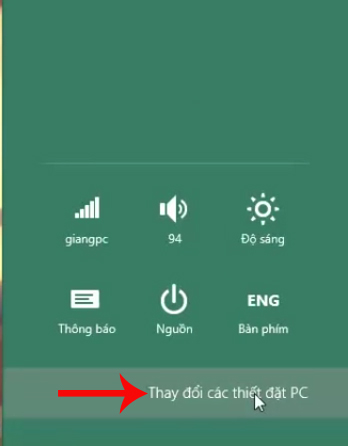
Step 1: First of all, we will open the Charm bar by moving the mouse to the upper right corner or pressing the Windows + W key combination, and then selecting Settings. The user then chooses to continue changing PC settings.
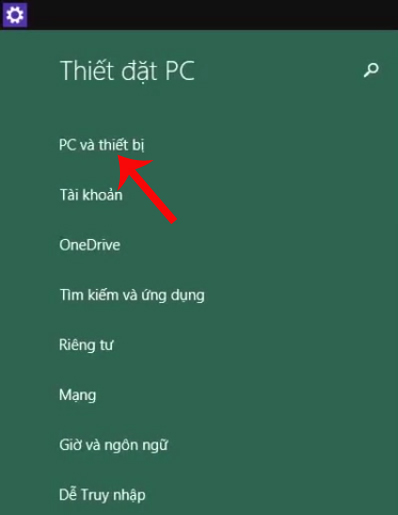
Step 2: Next, click on PC and devices.
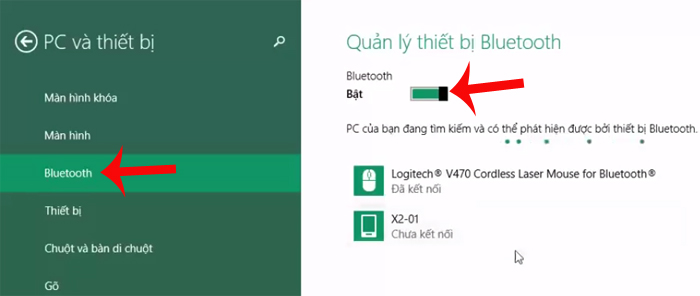
Step 3: Go to the settings interface of the PC and device, and click on the Bluetooth item. Looking at the interface on the right, users need to switch Bluetooth to On mode to use it.
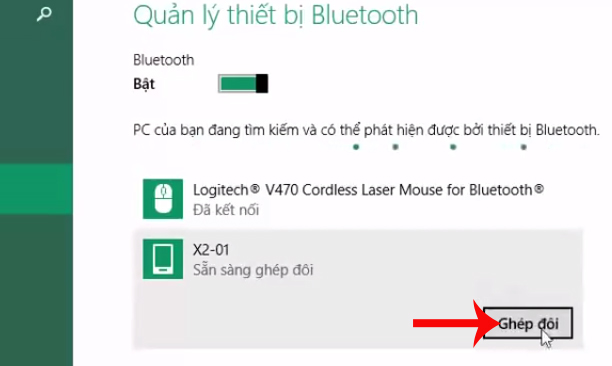
Soon, the Windows computer will automatically search for Bluetooth devices for us to choose to connect.
Step 4: Click on the device you want to connect and click on the Pairing section.
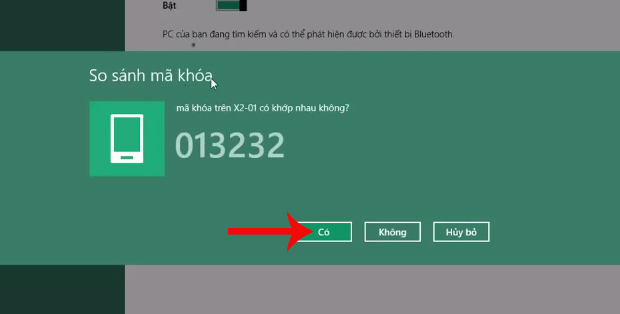
We wait for a while for the two devices to connect to each other. Then you will see a connection code, as shown below. Click Yes on both connected devices.
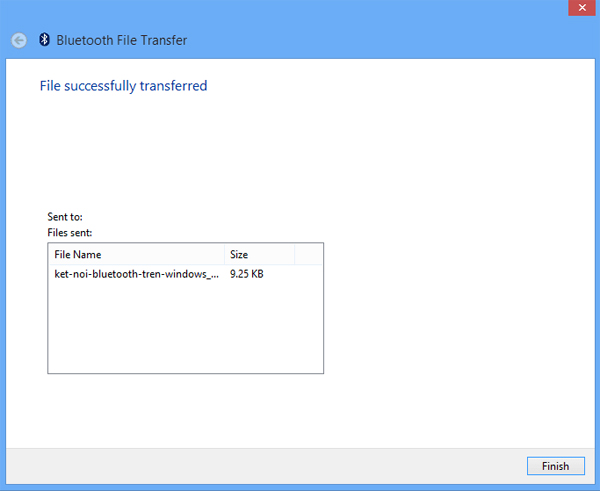
Step 5: The two devices have now been linked together. To send data, simply right-click on the data and select Send by Bluetooth to the previously connected device.
Wait for the notification data transfer to finish.
Above is a tutorial on how to turn on Bluetooth on Windows 7, 8, and 10 and connect Bluetooth devices to Windows computers. In case the Windows 8 computer does not find Bluetooth, you need to check whether Bluetooth is turned on or not, or install the Bluetooth driver. With Windows 10 computers, just update the driver. To update the driver automatically on your computer, read the article below.
How to Use SnailDriver to Automatically Update Drivers on Windows
5 basic ways to update and install drivers for computers
One of the "worst" problems that users often encounter on Windows 10 is the black screen error.
The black screen error can occur in some situations on Windows 10, stemming from problems related to the graphics card, the connection error between the computer and your monitor, the error occurring during the installation of the operating system, updating to new versions, etc., or simply happening randomly at any time.
In the article below, the administrator will guide you with some solutions to fix the black Windows 10 screen error.
In addition, if you encounter a black screen error on Windows 7, 8, or 8.1 computers, readers can refer to the steps to fix the error here.
Steps to fix a basic black Windows 10 computer screen
1. Black screen error during installation
Once there, try turning off the computer by pressing and holding the power button for a few seconds. If using a laptop, you can unplug the charger and remove the battery.
Unplug all unnecessa...
Microsoft is currently A/B testing a native dark style for the ChatGPT-powered Bing.com, and it has finally begun distributing out Bing.com to Google Chrome and Safari. On Windows 10 and 11, we got a pop-up that allowed Bing AI access through Google Chrome. It appears that certain people can also access Bing AI through Safari.
One of the most cutting-edge and effective language models for users is Bing AI, which is powered on ChatGPT-4. Since late February, Bing.com AI support has been accessible to Microsoft Edge users. Now, Microsoft is beginning to expand its support to all browsers, including Google Chrome and Apple Safari.
Bing AI pop-up in Chrome | Image Courtesy: Thewindowsfan.com
Anyone may now test Bing AI in Chrome thanks to a new pop-up that has begun to show in the taskbar of Windows 10 or 11. In our experiments, Google Chrome's native dark mode support allowed us to access Bing AI. The screenshot below illustrates how the white background changes to a black...
I could write a whole novel about the peculiar dilemma of maintaining visual coherence in Windows 11. A presentation and summary could be made with the help of Microsoft's Copilot, but guess what? The issue would linger, waiting for the next act.
Despite being the best operating system for productivity and gaming, Windows 11 is still not a unified system. Windows 11 may have a newer look and feel, but it still has some vestiges of older versions.
When users attempt to switch from a Microsoft account to a local one, Windows 11 still refers to the Windows 8 "Search Charm," a bizarre case of inconsistent design. When users try to switch to a local account while device encryption is enabled, they are met with the screen shown below.
" data-sizes="(max-width: 1621px) 100vw, 1621px" /> Charm Bar is mentioned in Windows 11
Windows 8's specialized 'Search Charm' has been removed from later builds of the operating system. Users are st...





Nhận xét
Đăng nhận xét